
Anaemia and Haemoglobin Disorders
Anaemia and Haemoglobin Disorders
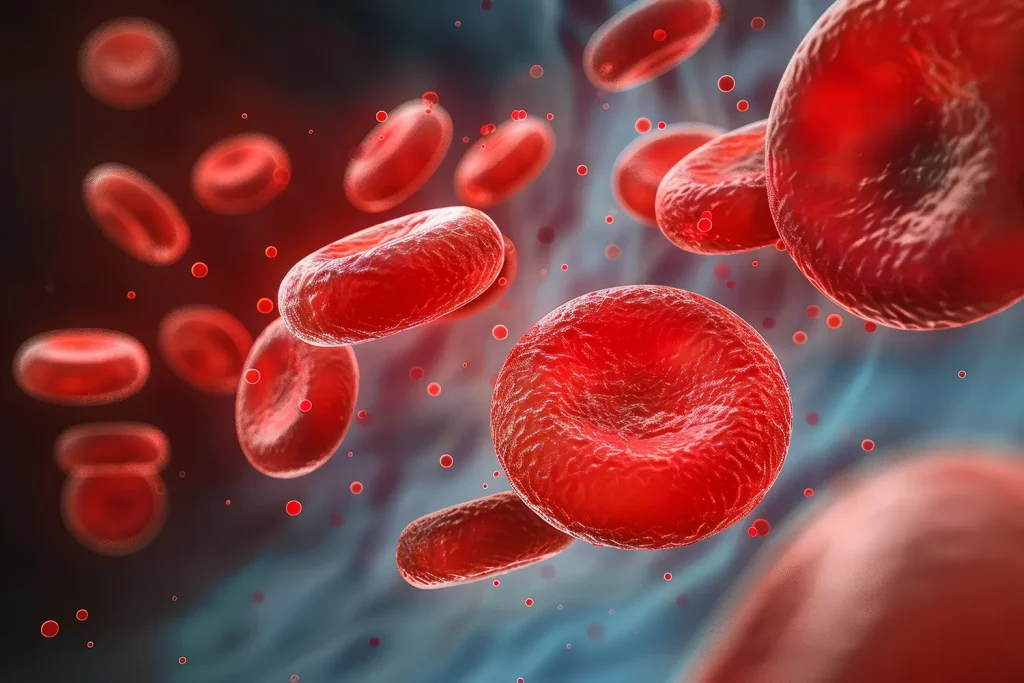
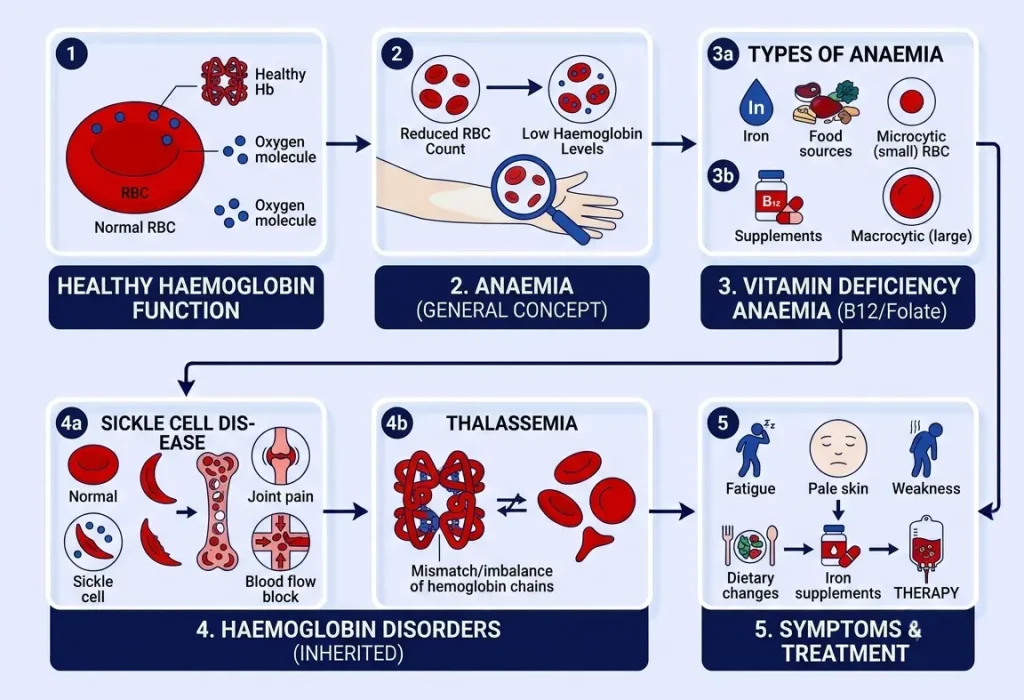
Anaemia and haemoglobin disorders are medical conditions that affect the quality, structure, or quantity of red blood cells (RBCs) and the essential oxygen-carrying protein within them—haemoglobin. When haemoglobin levels drop or function abnormally, tissues and organs across the body are deprived of adequate oxygen, leading to persistent fatigue, weakness, and long-term health complications if left unmanaged.
What the Conditions Are
Haemoglobin disorders and anaemias encompass both acquired deficiencies and inherited genetic conditions:
Iron-Deficiency Anaemia: The most common form of anaemia globally. It occurs when the body lacks sufficient iron to produce adequate amounts of haemoglobin, impairing oxygen delivery throughout the body.
Haemolytic Anaemia: A group of conditions where red blood cells are destroyed and removed from the bloodstream faster than the bone marrow can manufacture new ones.
Thalassemia: An inherited genetic blood disorder characterized by reduced or absent synthesis of specific haemoglobin globin chains ($\alpha$ or $\beta$). This leads to defective red blood cell production and severe chronic anaemia (e.g., Thalassemia Major and Intermedia).
Sickle Cell Disease: A hereditary blood disorder caused by a mutation in the $\beta$-globin gene, leading to abnormal “sickle” (crescent-shaped) red blood cells. These rigid cells clog micro-blood vessels, causing severe pain episodes (vaso-occlusive crises) and organ damage.
Common Symptoms
While specific symptoms depend on the underlying condition and severity, common warning signs across haemoglobin disorders include:
| Category | Warning Signs & Symptoms |
|---|---|
|
General & Oxygenation |
Chronic fatigue, extreme physical weakness, pale or yellowish skin (pallor/jaundice), shortness of breath upon exertion, dizziness. |
|
Pain & Circulatory |
Severe recurrent pain crises in joints, chest, or abdomen (characteristic of Sickle Cell), cold hands and feet, rapid or irregular heartbeats (palpitations). |
|
Physical & Structural |
Dark-colored urine, facial bone deformities or delayed growth in children (common in Thalassemia Major), enlarged spleen (splenomegaly). |
Possible Causes & Risk Factors
- Nutritional Deficiencies: Inadequate dietary intake, chronic poor absorption, or severe blood loss leading to depleted iron stores.
- Genetic & Inherited Traits: Autosomal recessive mutations passed down through families (Thalassemia trait, Sickle Cell trait).
- Autoimmune Mechanisms: The immune system producing autoantibodies that attack and destroy its own red blood cells (Autoimmune Haemolytic Anaemia).
- Chronic Blood Loss: Heavy menstrual bleeding, gastrointestinal ulcers, or internal bleeding.
- Toxins & Medications: Exposure to certain medications, infections, or severe environmental toxins triggering cell lysis.
When to Consult a Hematologist
You should seek a specialist evaluation with a hematologist if you experience:
- Persistent, severe fatigue and low haemoglobin levels that do not respond to basic oral iron supplements.
- Unexplained jaundice (yellowing of eyes and skin) accompanied by dark urine.
- Family history of Thalassemia, Sickle Cell Disease, or inherited haemoglobinopathies requiring pre-marital or family planning guidance.
- Recurrent episodes of severe joint, chest, or abdominal pain without an obvious surgical cause.
How Haemoglobin Disorders Are Diagnosed
Accurate diagnosis requires detailed laboratory testing to pinpoint the specific molecular or cellular cause:
- Complete Blood Count (CBC) & Peripheral Blood Smear: Measures exact haemoglobin levels, RBC count, and evaluates cell size, shape, and structure under a microscope.
- Iron Profile Studies: Assesses serum ferritin, serum iron, total iron-binding capacity (TIBC), and transferrin saturation to confirm or rule out iron depletion.
- High-Performance Liquid Chromatography (HPLC) / Haemoglobin Electrophoresis: Identifies and measures specific haemoglobin types ($\text{HbA}$, $\text{HbA}_2$, $\text{HbF}$, $\text{HbS}$) to diagnose Thalassemia and Sickle Cell Disease.
- Coombs Test (Direct & Indirect): Detects antibodies attached to red blood cells to evaluate suspected Autoimmune Haemolytic Anaemia.
- Genetic Testing (DNA Analysis): Pinpoints precise globin gene mutations to confirm Thalassemia subtypes and guide family counseling.
Available Treatment Approaches
Treatment strategies range from simple nutritional correction to advanced curative cellular therapies:
- Nutritional Support & Iron Therapy: Oral or intravenous (IV) iron infusions to rapidly restore depleted iron stores.
- Blood Component Transfusions: Regular, monitored packed red blood cell (PRBC) transfusions for severe forms of Thalassemia and Sickle Cell Disease.
- Targeted Medications & Chelation: Hydroxyurea to increase fetal haemoglobin ($\text{HbF}$) and reduce pain crises in Sickle Cell Disease; iron chelation therapy to remove excess iron accumulation resulting from frequent transfusions.
- Immunosuppressive Therapy: Corticosteroids or targeted immunomodulators to suppress autoimmune destruction in haemolytic anaemia.
- Bone Marrow / Stem Cell Transplantation: A curative option replacing defective blood stem cells with healthy donor cells in eligible patients with severe Thalassemia or Sickle Cell Disease.
FAQs
What is the difference between Thalassemia trait and Thalassemia Major?
Thalassemia trait (minor) means you carry one mutated gene; individuals are usually asymptomatic or have mild anaemia without requiring treatment. Thalassemia Major occurs when two mutated genes are inherited, resulting in severe anaemia that requires regular lifelong blood transfusions.
Can iron deficiency be treated just with diet?
While an iron-rich diet is beneficial, dietary changes alone are rarely sufficient to correct established iron-deficiency anaemia. Medical-grade oral or intravenous iron supplementation prescribed by a doctor is usually required to rebuild iron stores.
Is Sickle Cell Disease curable?
Yes. A Bone Marrow / Stem Cell Transplant can cure Sickle Cell Disease, particularly when performed early in life with a well-matched donor.
Our Services
Get an Appointment
Schedule your expert consultation with Dr. Nitin Chaudhary today.