
Bone Marrow Transplant
Bone Marrow Transplant (Stem Cell Transplant)
A Bone Marrow Transplant (BMT)—also known as a Hematopoietic Stem Cell Transplant (HSCT)—is an advanced medical procedure that replaces damaged, diseased, or non-functioning bone marrow with healthy blood-forming stem cells. Bone marrow is the soft, spongy tissue inside bones responsible for producing red blood cells, white blood cells, and platelets. A transplant restores the body’s ability to generate healthy blood cells and maintain a functional immune system.
Conditions Treated with Bone Marrow Transplant
A Bone Marrow Transplant is primarily used to treat severe, non-functioning, or cancerous blood conditions, including:
Hematologic Malignancies: Acute and Chronic Leukaemias, Hodgkin and Non-Hodgkin Lymphomas, and Multiple Myeloma.
Bone Marrow Failure Syndromes: Aplastic Anemia, Severe Combined Immunodeficiency (SCID), and Myelodysplastic Syndromes (MDS).
Non-Malignant Genetic Blood Disorders: Thalassemia Major, Sickle Cell Disease, and metabolic storage disorders.
Common Symptoms Indicating Need for Evaluation
Patients requiring a transplant typically experience symptoms related to bone marrow failure or advanced blood disorders:
| Category | Associated Symptoms |
|---|---|
|
Anemic Symptoms |
Chronic, severe fatigue, pale skin, weakness, dizziness, and shortness of breath upon exertion. |
|
Immune / Infectious |
Frequent, recurrent, or severe bacterial and viral infections due to abnormally low white cell counts. |
|
Bleeding & Clotting |
Unexplained bruising, persistent nosebleeds, bleeding gums, or tiny red spots under the skin (petechiae). |
|
Organ / Tissue Signs |
Painless lymph node swelling, bone or joint pain, unexplained weight loss, and enlarged spleen/liver. |
Possible Causes for Marrow Dysfunction
The underlying necessity for a bone marrow transplant arises when the bone marrow is destroyed or severely damaged by:
- Malignant Cell Infiltration: Cancerous cells crowding out normal hematopoiesis (blood cell creation).
- Genetic & Inherited Mutations: Congenital defects altering hemoglobin or blood stem cell development.
- Autoimmune Destruction: The body's immune system attacking its own stem cells (e.g., Severe Aplastic Anemia).
- Toxic Exposures & Treatments: Damage from high-dose chemotherapy, radiation exposure, or chemical toxins like benzene.
When to Consult a Hematologist
You should consult a hematologist to evaluate transplant eligibility if:
- You or a family member have been diagnosed with high-risk, relapsed, or non-responsive blood cancer.
- Laboratory tests show persistent severe cytopenias (dangerously low counts of red cells, white cells, or platelets).
- Standard therapeutic options (such as frontline chemotherapy or immunosuppressive therapies) fail to control the disorder.
- Screening indicates a hereditary severe blood disease requiring definitive cellular therapy.
How Eligibility & Matching Are Diagnosed
Before proceeding with a transplant, thorough pre-transplant evaluations are conducted:
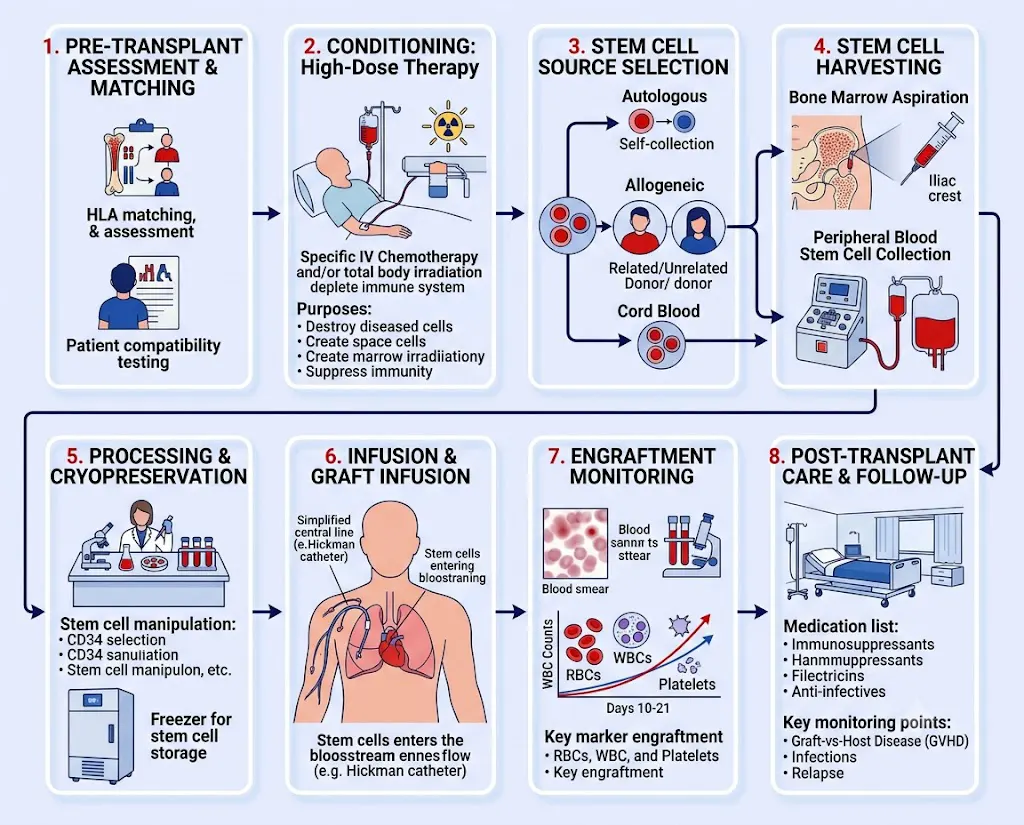
- HLA Typing (Human Leukocyte Antigen Test): A specialized blood test that matches tissue markers between a donor and the recipient to minimize graft-rejection or Graft-versus-Host Disease (GvHD).
- Bone Marrow Aspiration & Biopsy: Evaluates current disease status and cellular composition.
- Comprehensive Organ Function Testing: Cardiac, pulmonary, liver, and renal assessments (ECG, Echocardiogram, Pulmonary Function Tests, Liver/Kidney panels) to ensure the body can tolerate conditioning regimens.
- Infectious Disease Screening: Comprehensive viral and bacterial panels (HIV, Hepatitis B/C, CMV, EBV) to mitigate infection risks post-transplant.
Types & Available Treatment Approaches
Bone Marrow Transplantation involves specific approaches based on the source of the replacement stem cells:
1. Types of Transplants
- Autologous Transplant: Uses the patient's own stem cells, collected prior to high-dose conditioning therapy. Commonly used for Multiple Myeloma and certain Lymphomas.
- Allogeneic Transplant: Uses stem cells from a matched donor (related family member or matched unrelated donor). Essential for conditions where the patient's own marrow is intrinsically diseased (e.g., Leukaemias, Aplastic Anemia).
- Haploidentical Transplant: A specialized allogeneic transplant utilizing a half-matched family donor (e.g., parent or child).
2. The Transplant Process
- Conditioning Phase: High-dose chemotherapy and/or total body irradiation (TBI) to destroy remaining cancer cells and clear space in the bone marrow cavity.
- Infusion: Stem cells are delivered intravenously into the bloodstream, where they naturally migrate to the bone marrow space.
- Engraftment & Recovery: Over 2 to 4 weeks, the new stem cells begin manufacturing healthy blood cells, during which supportive care and infection prevention are critical.
FAQs
How are donor stem cells collected?
Stem cells are usually collected from the donor’s peripheral blood via a safe, non-surgical process called apheresis. Less commonly, stem cells are collected directly from the pelvic bone under anesthesia.
What is Graft-versus-Host Disease (GvHD)?
GvHD is a potential complication in Allogeneic transplants where the donor’s immune cells identify the recipient’s tissue as foreign and attack it. Modern preventative medications greatly reduce this risk.
How long does recovery take after a transplant?
Initial engraftment takes about 2 to 4 weeks in the hospital. Full immune system recovery typically takes 6 to 12 months, during which close monitoring is required.
Our Services
Get an Appointment
Schedule your expert consultation with Dr. Nitin Chaudhary today.